Unknown's avatar

About BlogGMA

We are part of Global Minorities Alliance www.globalminorities.co.uk and feature weekly news articles, press releases and highlight human rights issues around the world from expert writers, academics, human rights activists and journalists from around the world.

International Women’s Day 2016

In the 21st century, women still continue to be subject to degrading treatment, denial for justice, rule of law and exploitation at the hands of societies which continue to haunt women in different shapes and forms around the world.

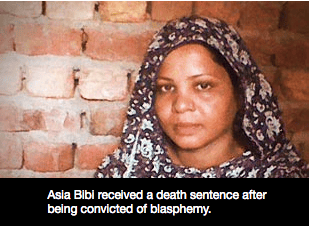
Among these millions of  women who struggle for hope, justice, equal and a better world is Pakistan’s Aasia Bibi, a Christian mother of five on death row over blasphemy. Her indomitable struggle, courage and hope for a life to see her family as a free woman keeps her alive in Punjab’s solitary confinement amid threats even from within prison.

Global Minorities Alliance would like to remember all these strong, brave and hopeful women around the world who continue to struggle for their fundamental equal rights regardless of the challenges they might have to face. We salute all these women for their unkillable spirit for equal rights.

Let us not celebrate today’s International Day as a yearly ritual but let us become a bridge against societal attitudes, injustices and inequalities women continue to face, to make this world more better, fair and equal for generations to come. Global Minorities Alliance continues to fight against unjust and unequal attitudes prevalent in our societies.

On behalf of our team and volunteers we wish you a very happy International Women’s Day 2016.
 

Screen-Shot-2015-06-01-at-7.39.04-AM

How wrongful convictions and cold cases are connected in the US

The Death Penalty Information Center (DPIC) reported that “since 1973, 156 men and women from 26 states have been exonerated from death row.”

One of the most notable wrongful conviction victories came when the Connecticut State Supreme Court ordered a new trial for Richard Lapointe. On Oct 2, 2015, on International Wrongful Conviction Day, Lapointe was set free. The judge ruled that he cannot be retried again.

Lapointe is a mentally disabled dishwasher who was denied to introduce evidence to support his innocence claim when he was tried and convicted for the rape-murder of Bernice Martin (88). He received life without the possibility of parole. Lapointe had been imprisoned continuously since his arrest in July 1989. One of the many issues in his case was the application of inaccurate/outdated arson detection.

Before 1992, many guidelines for analyzing arson were not formalized and there was a lack of formal training. In 1992, the National Fire Protection Association (NFPA) released the first arson guidebook (NFPA 921). We do not know exactly how many people were sent to prison because of outdated forensic arson detection. But we do know that when an industry fails to monitor themselves and when they do not require continued education from their members, others pay the price.

Continue reading →

APPG for International Freedom of Religion or Belief Inquiry Finds UK Government Policy on Pakistani Religious Minorities Inadequate

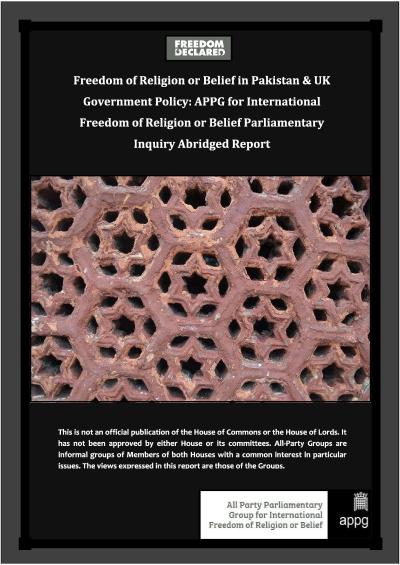
On Wednesday, 24 February, the All Party Parliamentary Group for International Freedom of Religion or Belief launches its inquiry report on Freedom of Religion or Belief in Pakistan & UK Government Policy. The report follows a parliamentary hearing held in November 2015, attended by various NGOs, including Global Minorities Alliance. The report challenges the Home Office’s Country Information and Guidance on Pakistani Christians and Christian converts while also finding that Ahmadis, Christians and Hindus in Pakistan face a real risk of persecution, the likelihood of which depends on their encounters with and actions amongst people of other faiths or beliefs.

APPG Abridged Report - Pakistan Inquiry

The APPG inquiry’s main findings and recommendations include an urgent requirement for a new country guidance case regarding Pakistani Christians to provide sufficient and accurate guidance for Pakistani Christian asylum cases. At the very least, the APPG urges the Home Office to limit the use of the current AK and SK country guidance case in its Country Information and Guidance (CIG) report on Pakistani Christians and Christian converts to be used only for cases involving Evangelical Christians and blasphemy charges from non-State actors. In the report, the APPG urges the Home Office to acknowledge the strong evidence highlighting Pakistani authorities’ failure to protect minority religious communities from rights violations and amend its CIGs accordingly. The inquiry also highlights concerns about the possibility of internal relocation of Pakistani religious minorities, which the APPG urges the UK Home Office to recognise as unsafe and unviable.  Continue reading →