Unknown's avatar

About BlogGMA

We are part of Global Minorities Alliance www.globalminorities.co.uk and feature weekly news articles, press releases and highlight human rights issues around the world from expert writers, academics, human rights activists and journalists from around the world.

A Strong Man : Watch the new film created by refugee men calling for violence against women to stop

white ribbon
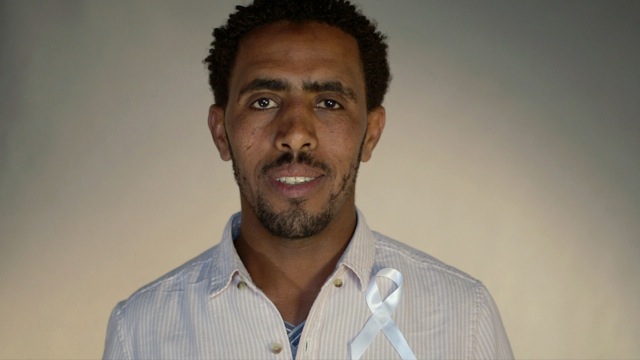
A group of refugee men who fled their homes in countries including Eritrea, Ethiopia, Sudan and Syria to seek sanctuary in Scotland have launched an online short film* calling on other men to stop violence against women.

*(for non-English language links see below)

A Strong Man, which echoes the messages of the White Ribbon Scotland campaign, calls on men of all cultures and faiths to take pride in being gentle and to teach their friends, families and communities that violence against women is wrong. Global Minorities Alliance welcomes this inter-community contribution to the ongoing efforts to end violence against women, and supports men and women from all backgrounds who are united in their condemnation of such unacceptable attitudes and behaviour.

The film was made by 67 men from the Maryhill Integration Network’s men’s group who originate form 11 countries, with the support of Glasgow film-makers media co-op.

Firew Desta, a refugee from Ethiopia involved in the making of ‘A Strong Man’, said: “The topic of the film project is a really important one because violence against women is happening in cultures and communities all around the world.

“We wanted to send a strong message that violence against women is wrong no matter what your culture or religion. We must teach our children this; to be respectful and listen to each other. This film gives us a chance to help to change attitudes.”

Rose Filippi, Maryhill Integration Network men’s group co-ordinator added: “All of these men have fled violence or the threat of it to seek safety in Scotland, so this is an issue that resonated with them.”

“The film allowed the men to use their considerable skills, and also to find a way of communicating a powerful message to other men in their communities, in wider Scottish society and beyond. It’s been a powerful and positive process.”

Vilte Vaitkute of media co-op, who developed the film with the group over a period of eight months was impressed by the ideas and creativity the men brought to the project.

“I was blown away by the fact many of the guys have suffered torture and violence themselves in their own countries, and are so sensitive about issues of violence against women in the home,” she said.

The two-minute film, which is available in English, Arabic, Tigrinya and Amharic, reflecting the first languages of men involved, will be distributed by an online social media campaign and available for interested men’s groups, community groups and other organisations.

The film is backed by the White Ribbon Scotland. Callum Hendry, campaign coordinator, said: “It is vital that men are able to raise awareness of the nature and cause of the issue and to challenge the attitudes of those who excuse violence against women or gender inequality.”

Watch this important film here :

Arabic Version: https://youtu.be/J8zJu0paY2E

Tigrinya Version: https://youtu.be/R-eoC2vvhww

English Version: https://youtu.be/mwGEz3YhD6Y

Amharic Version: https://youtu.be/_pXPPIHH_1Q

For more information or images contact Rose Filippi at Maryhill Integration Network on 0141 946 9106 or email rose@maryhillintegration.org.uk
Arson, displacement and unemployment: Life after asylum in Germany

3366690132_8076a61abb_z

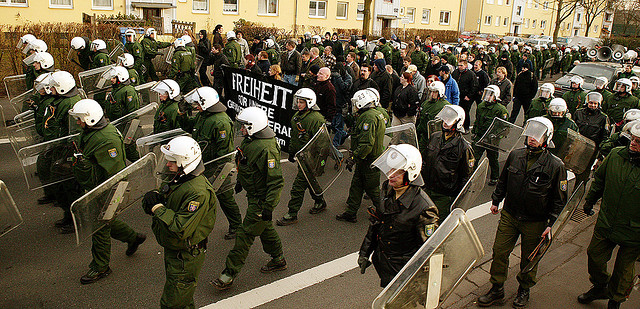
It is almost impossible to legally ask for asylum in Germany. In order to do so the country from which a person enters Germany must itself be carrying out persecution. This does not apply to any of the countries that border Germany, so the only way to legally ask for asylum is to enter the country by sea or air.

According to the Dublin Convention, Germany can send any asylum seeker back to their country if the government is able to prove where they come from. If this cannot be done, the asylum seeker can still only apply for limited protection.

After having applied, the asylum seekers are dispersed across the Bundesländer (the German federal states) and must stay in the accommodation they are given until a decision is made about their request. This process can go on for more than a year, especially for those from countries such as Pakistan and Afghanistan. If asylum cannot be granted, they may still be granted protection as refugees. A refugee is a person who “is temporarily out of their native country because of fear of persecution due to their religion, nationality, political view or social conditions” and “whose human rights have been or might be violated”.

Continue reading →

Another blow of the machete to free speech and democracy in Bangladesh

9614160500_2d5664fded_z

By Ophelia Chatterjee

“No one should cross the limit” announced Bangladesh’s Inspector General of Police earlier this month. In the wake of the murder of Niloy Neel, the fourth secularist Bangladeshi blogger to be hacked to death this year, this may seem both an attempt to close the stable door on escalating fundamentalist violence after it has already bolted, and a wilful understatement given the horrific severity and increasing incidence of such attacks.

But astonishingly, the senior officer was not sanctioning the perpetrators of the attacks, but rather warning activists to censor themselves if they want to avoid being placed on one of several hit lists – the likes of which have already proven fatal for Neel and three others this year alone. This barely tacit official justification for fatally attacking and maiming people for expressing their views is a stark indication of both the source and scale of the problem currently being faced in Bangladesh. Global Minorities Alliance has joined hands with the International Humanist and Ethical Union, signing an open letter to the Bangladeshi Prime Minister and president calling on them to condemn this victim blaming narrative.

The government and constitution of the Muslim majority country are ostensibly secular, and have been since Bangladesh’s hard-won independence from Pakistan in 1971. However, activists such as Imran Sarker have accused those currently in power of channelling more energy into the hounding of secularists in the name of ‘defending Islam’, than reining in groups such as the militant Ansarullah Bangla Team who have claimed responsibility for the horrific attacks. This flaccid commitment to the protection of freedom of speech and democratic values has intensified in tandem with a sudden surge in attacks on secularist activists in the last two years. The 2010 establishment of a war crimes tribunal forced the country to grapple with its considerable lack of internal consensus over the role of religion in politics, and since 2013 eight bloggers have been violently attacked. Reports have emerged that prior to his murder Neel expressed his fear that he would be targeted to the police. According to Taslima Nasreen, the only assistance offered in response was the advice that he should leave the country. Contrast this with the prompt arrest of journalist Probir Sikdar just last week, who accused a cabinet minister of committing war crimes during the war for independence – it seems that the police are still on higher alert for the crime of “cast[ing] aspersion on a minister using information technology” than for taking action against those perpetuating the current bloodbath. Angry accusations that the government is pandering to hard-line elements within Bangladesh’s Muslim majority are becoming increasingly difficult to rebuff.

The roots of this recent escalation are complex, and heavily related to the Pandora’s box of carnage and instability clumsily unleashed by US and UK led intervention across neighbouring regions in recent decades. In a year in which Human Rights Watch has despairingly observed that “it can seem as if the world is unravelling”, these events form just a small part of the patchwork of instability, turmoil and bloodshed that has swept across the Middle East and parts of Asia and Africa.

The GMA Blog seemed a fitting place to discuss these appalling attempts to silence expression of dissident views online. These events have been a stark reminder that we are lucky to be living in a place and time where we have the luxury to be able to take protection from this for granted – however, we should not be complacent, and should continue to challenge attempts to undermine this right wherever they appear. This may be in the guise of the UK Conservative government’s more-than faintly sinister counter-extremism bill at home, or further afield. As many in Bangladesh are currently urging, it is not simply a case of whether the keyboard is mightier than the machete, but whether governments at home and around the world will begin to accord all their citizens the protections due to them, regardless of their political or religious affiliation.