Pakistan’s failure to protect Ahmadiyya citizens

Glasgow, Scotland: Global Minorities Alliance has called on Pakistan government to ensure the protection of Ahmadiyya Muslims who are routinely targeted because of their religious beliefs. Ahmadis were declared non-Muslims in 1974 after the then government caved in to religious pressure by mainstream Muslims who consider Ahmadis as heretic.

Global Minorities Alliance has called on numerous levels for the protection of the most persecuted minority in Pakistan.

Attacks on the Ahmadis are sadly routine in Pakistan who are chased only because of their religious beliefs said GMA’s Cheif Executive, Mr Manassi Bernard. ‘The government of Pakistan has failed implement National Action Plan (NAP) to curb hate crimes when it comes to Ahmmidyya community who are subject to targeted killing’.

In the most recent killing of Dr Hameed Ahmad, a 63-year old homeopathic practitioner who was killed outside his home in Darul Salam Colony, Attock, by unknown assailants. According to reports, the deceased was returning home from his clinic after the midday prayer. When he arrived at the gate of his house unknown assailants approached him on a motorcycle and opened fire. One of the shots struck him in the head causing him to die on the spot. After the assault the attackers managed to make a swift getaway.

thumbnail_Hameed Ahmad sb

Dr Hameed Ahmad

Dr Hameed Ahmad had been facing threats and intimidation for some time now on account of being an Ahmadi. Almost a year and half ago his clinic survived an attempted arson attack. Despite all this he remained committed to his work until the very end and was recognized by all who knew him as a decent and upright man. He is survived by two sons and three daughters.

Expressing his grief at this tragic murder, the spokesperson of Jama’at Ahmadiyya, Salim ud Din said:

“I am shocked and saddened at the news of Dr Hameed Ahmad’s murder. This is a pain that Jama’at Ahmadiyya has long had to get used to. Only recently on May 25, another Ahmadi, Mr Daud Ahmad, was killed in a similar targeted attack in Karachi. It is a cause of great concern to us that in the space of ten days, two innocent Ahmadis have been gunned down outside their homes. It seems that members of the community are again in the crosshairs of extremist groups. On the one hand the authorities speak of good governance, and on the other nothing is done to safeguard the rights of Ahmadis in Pakistan. Hate-speech against Ahmadis has become a matter of routine in the country and enables tragic events like this to take place. The National Action Plan (NAP) was meant to crackdown on hate-crimes but it seems that this isn’t the case when it comes to Ahmadis. I call on the authorities to apprehend Dr Hamid Ahmad’s killers  as quickly as possible and send out a clear message that attacks such as this will not be tolerated and dealt with in the harshest terms.

Source: Nazarat Umur Aama, Pakistan 

People with learning disabilities want to find love too

Chido Ndadzungira, The Open University

play4smee

play4smee/Flickr

This Valentine’s Day will once again see a celebration of love. Unfortunately for many people with learning disabilities, this is just a dream. Although they may want to be in a relationship, they are often faced with barriers and challenges that prevent them finding what many take for granted. But specialised dating agencies can help to provide the support they need to meet new people and find romance.

People with learning disabilities, like everyone else, have a need for affectionate and intimate relationships. Yet many people with learning disabilities don’t get to have this type of relationship because of a lack of social and practical support, and society’s negative and stereotypical attitudes. Although attitudes are changing, it is evident that some caregivers still hold these negative perceptions, which include the belief that people with learning disabilities are asexual or “childlike”. Not only do these beliefs hold people with learning disabilities back from relationships, they also infringe on their human right to privacy and a family life, as outlined in Article 8 of the Human Rights Act 1998.

My research explores the views and experiences of women with learning disabilities on sexual relationships and as part of my PhD I gave them a platform to talk openly about this taboo subject. I interviewed 16 women with mild to moderate learning disabilities who were members of Stars in the Sky, a pioneering dating agency that you might recognise from the Channel 4’s Undateables. These women wanted to be in a relationship. As Monica told me:

… look how long I will be in my 50s and then 60s and I am thinking I don’t want to be in the same situation … being by myself as I become an old lady. I want somebody to settle down and spend the rest of my life with.

When Barbara was asked why she had joined up, she said:

… I want to join because I was looking for relationships … To meet people, not necessarily a boyfriend straight away but friends to begin with.

The social networks that many people take for granted are often restricted for people with learning disabilities and they find it hard to engage or access social activities where they can meet people and possibly form relationships. The challenge, however, is getting the right support. As Georgia, one participant in a 2014 study, said:

I think I do need a bit of support … And that’s to like, meet people … And that so yeah, gives me a bit of confidence to speak, and see if I can meet the right one, and could say to them, ‘well what d’you think about this … fella?’.

Protection from abuse

People with learning disabilities – both men and women – are vulnerable to sexual abuse and need protection from this. Monica, for example, said:

[I have] never ever experienced a proper relationship in my life. It’s just people taking advantage all my life yeah, and it’s not right.

But there should be a balance between protecting people from abuse and enabling them to get into relationships, otherwise people are denied their right to do so. To prevent abuse, people with learning disabilities should have access to sex and relationships education, and caregivers should be prepared to discuss issues on sex and relationships openly in a proactive, rather than reactive, way. This would equip people with the knowledge they need to enjoy relationships in a safe way. Not being open or only dealing with issues in a reactive way is more likely to leave people vulnerable to abuse.

Professionals and caregivers also inappropriately apply the Mental Capacity Act 2005 to some people with learning disabilities, especially those with severe learning disabilities. The act states that the capacity to consent to sexual relationships must be assumed unless proven otherwise and an unwise decision does not necessarily imply a lack of capacity. Research that reviewed cases on the capacity to consent to sexual activity highlighted failures in the implementation of the act and suggested a reframed capacity assessment informed by research into sexual decision making.

Dating agencies

Special dating agencies can enable people with learning disabilities to find relationships and broaden their social networks. The decade has seen a growth of friendship and dating groups for people with learning disabilities, including HeartVenture, Luv2meetU and matesndates. They match people interested in forming relationships and support them on their first date.

Stars in the Sky, one of the first to be set up, by two women with learning disabilities, is now unfortunately closing due to financial constraints. It also featured in The Undateables, and it is clearly evident from the series that support can enable people with learning disabilities to form relationships. And success is not only measured by a successful date but by the confidence that individuals gain by going on a date, too.

Samantha joined the dating agency because, she said:

I was struggling to find anyone on my own. And I want, I guess what every girl, woman would like to have partner or companion to share things with.

Jane’s reason for joining was “because I didn’t want to be single anymore. I hate being on my own and being miserable.”

Relationships have a positive impact on mental health and the well-being of people in general. This also goes for people with learning disabilities, and for it to happen their sexuality must be acknowledged. They need support to allow them the opportunity to form and develop relationships, and they should be empowered with the tools they need to consent to sexual relationships. Hopefully, if we get these things right, people with learning disabilities will be able to enjoy forming relationships in a safe environment, and fulfil their need to love and be loved.

This article was originally published on The Conversation. Read the original article.

Germany’s welcome to migrants wears thin as Cologne launches more festivities

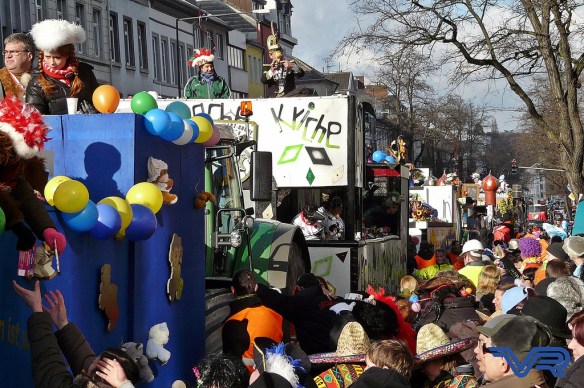
German CarnivalGermany is preparing for Carnival Festivities/Neuwiser, Flickr

by Claire de Galembert, ENS Cachan – Paris-Saclay

Willkommenskultur, or “culture of acceptance”, has been a major part of the German political discourse since summer 2015. It evokes a spirit of solidarity towards the large number of migrants who have sought asylum in the European Union over the past year.

This commitment, together with the work of many volunteers to supplement state support for new arrivals, seemed to finally lift the shadows of Germany’s past – and almost made the world forget that it had long refused to consider itself a country of migration. The generosity seemed all the more spectacular with many of its neighbours being less than welcoming to new arrivals.

But the Germany of 2016 has a Willkommenskultur hangover. The country is in shock after the events of New Year’s Eve in Cologne, a city that has long been a symbol of German multiculturalism. And now, as Cologne prepares for its annual carnival festivities, the city has doubled its police presence and increased video surveillance. A local girls’ school will close on the opening day of the carnival to protect its students.

This is unsurprising when we recall the events of New Year’s Eve in Cologne, at least those that seem proven: women who came to the centre to watch the festivities were attacked by groups of men under the influence of alcohol, some of the men were described as of “Arab or North African origin” and some of them were asylum seekers.

The extent of the crimes was either little noticed or little admitted by the police, who initially described the evening as relatively peaceful. This optimistic assessment was quickly refuted by the exponential increase in complaints. By January 18, the total number of alleged crimes stood at 766, nearly half of which were sexual in nature, including three rapes. The head of police was suspended over his handling of the attacks.

‘We can do it’?

Willkommenskutur portrayed citizens as being ready to roll up their sleeves and take on the social and economic costs of integration of newcomers – estimated to be €50 billion by 2017. But it was far from universally felt in Germany. The continuous flow of arrivals, the difficulty of housing and integrating more than a million refugees, and disagreements within the EU over sharing the burden stoked scepticism within society at large, and among mainstream political parties. Meanwhile, the Islamophobic movement Pegida launched attacks on immigrants, both on social media (including the #raperefugee Twitter hashtag) and in the streets.

At a December meeting of the ruling CDU party, Angela Merkel received a long standing ovation after her speech on the refugees crisis, reaffirming her leadership within the party. But this has not stemmed the tide of complaints. Her mantra “Schaffen wir das!” (“We can do it!”) seemed to many to be more of an incantation than an expression of collective will.

The Cologne attacks have weakened the moral consensus that had formed around the Chancellor. And they were a godsend to Merkel’s critics, including the right-wing Alternative für Deutschland party. The events of New Year’s Eve fit perfectly with their preferred themes, particularly the link they draw between refugees and security, not to mention the difficulty of assimilating immigrants and the threat to Germany’s gender-equality standards.

Populist rhetoric

Beyond the rise of xenophobic violence, evidence of a shift in German attitudes is widespread. A regional mayor in Bavaria sent a group of immigrants by bus to Berlin to protest Germany’s asylum laws. In an interview, none other than former chancellor Gerhard Schröder asserted that Europe’s doors couldn’t be left open forever:

The capacity to take in, care for and integrate refugees in Germany is limited, not unlimited. Anything else is an illusion.

The unease has been felt even more strongly in other European countries. Germany’s willingness to meet the challenge of mass immigration through its Willkommenskultur has been unbearable for its neighbours. Many seized on the situation as evidence that they were right all along about the need to close Europe’s borders – and to call into question Merkel’s unilateral choice to open them. The prime minister of Slovakia, Robert Fico, went so far as to say that “migrants cannot be integrated”.

Germany’s populist movements have their parallels elsewhere, from the National Front in France to Nigel Farage and UKIP in the UK and Republicans Donald Trump and Ted Cruz in the United States. After the attacks, Trump went to Twitter in an attempt to link immigration and insecurity:

Ethical responsibility

But beyond the populists and xenophobes, signs are everywhere of a more difficult political climate. Not just the closing of borders, but also a hardening of tone – for example, a proposed law in Denmark would authorise the confiscation of refugees’ valuables. It’s a safe bet that the spreading appeal of anti-immigrant attitudes, once limited to the extreme right, will harm immigrants already living in Europe, especially Muslims.

The erosion of Willkommenskultur means Germany must leave behind the moral stance underpinning Angela Merkel’s position and return to the ethic of responsibility, as laid out in the work of German sociologist and philosopher Max Weber. This requires consideration not only of the economic capacity for absorbing such an immense wave of immigrants but also its social and political acceptability. Failing to do so risks aggravating the panic emerging in Germany and beyond.

But the ethic of responsibility doesn’t obviate the need to come up with a balanced European response to immigration that remains true to the rule of law – otherwise, the populist rhetoric will continue to have a wide appeal. Between the pitfalls of being insufficiently attentive to the concerns of a growing percentage of the German population and giving in to the diktats of the extreme right, the way forward is a narrow one, but it exists.

The Conversation

Claire de Galembert, Sociologue CNRS, ENS Cachan – Paris-Saclay

This article was originally published on The Conversation. Read the original article.