Interviews about rights of women in Egypt – Hopes and Aspirations
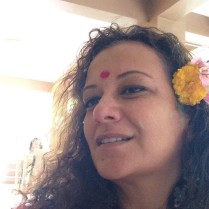
Nadia Siraj – Interviewee
Following the previous post about Maryam few weeks ago here is my II part of the series.
Nadia Siraj (44, Cairo) was born in Saudi Arabia. She has lived half of her life in Saudi Arabia and half in Egypt. She has worked as Corporate Social Responsibility (CSR) expert for corporations such as the National Commercial Bank in Jada, Microsoft, British Consulate or Islamic Development Bank as well as in the Social Field in several countries such as Saudi Arabia, Egypt or Dubai. At some point, she decided to leave corporate and focus more on Meditation and Energy, which had always been her passion. She believes in the importance of empowering people regardless of any condition, thereby making people being themselves. Nadia loves self-expression through body (dancing and music). She is co-founder of a centre that promotes meditation through dancing in order to make people to find their own serenity.
Maryam and Nadia stories make you clearly see some aspects that negatively affect women. In their opinion, the increasing influence of wrong religious interpretations, tradition and even Capitalism (‘is the other extreme of treating a woman like an object and making her feel she is unworthy without having certain looks, buying certain products, etc.’) make women to be more exposed to harassment, to be forced to wear veil, to get married at certain age or being restricted of choices and submissive on relationships. This process has especially been strengthen since late 70’s, ‘when wahabi culture started being imported to Egypt’.
Nevertheless, Maryam and Nadia believe ‘women are awaking’. Women are becoming conscious about their situation. Rather, as Nadia notices, there is raising ‘a strong reaction reflected by feminism movements’, although, in her opinion, another positive respond to fight for equality could have been developed instead of a movement based on ‘frustration and opposition’.
Since the fall of Mubarak’s regime (February 2011), Nadia believes that the ‘revolution’ worked for something and the fall of Mubarak’s regime ‘broke something old’ so it triggered a process ‘in which people realize that there are other options in life’.
On the other hand Nadia considers that ‘ her divorce was one of the big turning points in her life because she realized that all people, who interfered in her life and were so keen on finding ways to control her. They are not there anymore or they are only there when it requires control. She said, she started questioning many of the values and beliefs in which she had been raised and then she disregarded many of them without being reactive, because being reactive will make things worse’. She is instilling it to her son and her parents start ‘to see things differently when it comes to raising girls different from boys and controlling them more than boys. ‘It’s a learning process for all of us we are breaking cycles of unnecessary controlling and being controlled’ she said.
Nadia highlights her younger period in Saudi Arabia, where it was very difficult for a woman to have a job. More recently, she remembers the harsh period she spent because of her son’s custody: ‘I have suffered dealing with separation, and the law stands always on the side of the man more than a woman’ For Nadia it was even difficult to being with being divorced with a son.
Hence, when I asked Nadia about the role of men in women’s situation, she said: ‘there were successful women who were supported by their fathers, their husbands, their brothers, etc. I was lucky to be one of them in certain aspects of my life where my father was there to give me support. Nevertheless, it is not the case anymore because there is much competition and people are so busy with their own stories so a lot of women have to empower themselves by finding their ways’.
Talking about younger women Maryam and Nadia agree on the fact that there is a certain polarity or contrast, but at different levels. Nadia observed that new generations face ‘resistance from the elders, who cannot accept that the whole area of security (everything that they believe in and keeps them alive) is being shacked. They don’t want that. They want to hold on to what they know and believe, so the younger generations are challenging the older ones and only those of them (the young ones) who get stuck in the ego and self-victimization are not able to move on and adopt change’.
Thus, looking at the future like Maryam, Nadia has a lot of hope. She sees ‘more respect from young men and they are more in touch with their feminine side; whereas many women are standing for themselves, for their rights and being more confident’. However, she points out the way Middle East societies are viewed, especially from Western countries. First, ‘they are always focused on books and conferences. It is always focused on driving, entrepreneurs, etc. and it is not focused more on based wise on women’s need. Whatever they look at, it is more in favour of consumerism at the end; so entities that promote independence in these aspects make women independent only financially, thereby making more consumers as equal as men’. Thus, she doesn’t see this independence ‘as a genuine step in really being concern on women’. Secondly, she saw many women from different countries (Dubai, Morocco, UK, Iran, Turkey, US) who had their own issues. They ‘are not equally treated as men, not equally paid as men, emotionally or physically abused by men’. Hence, she doesn’t like the idea of ‘spotlighting Middle East as an area where women are oppressed and it doesn’t happen anywhere else’.
She told me that ‘it is happening everywhere in different ways’.
Javier 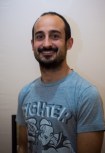 Milán López (27, Spain) graduated in Political Science and Public Administration and specialized in International Cooperation, Project Management and Development Processes. He has been involved in activist movements as well as getting involved into Social Field through volunteering. He has worked for NGOs at national and international level (Spain, Senegal and Egypt) as project manager assistant and consultant/facilitator. Currently, he is doing a European Volunteering Service in Romania.