Refugee Week 2015: celebrate!

refugee weekBy GMA

There are lots of reasons for sadness this year’s #RefugeeWeek. According to Refugee Action, there are now more refugees worldwide than ever before; one in every 122 people worldwide is displaced from their home, and someone is forced to flee every two seconds. This year, more than 1,800 people have died trying to cross the Mediterranean, and more people set out into the unknown everyday.

And yet the theme for this year’s Refugee Week is celebrate. Why? Because behind all the sadness (and behind all the media scaremongering about ‘migrants’ which cannot see the story behind a refugee’s flight) there is something else which needs to be grasped – that is, that #RefugeesContribute.

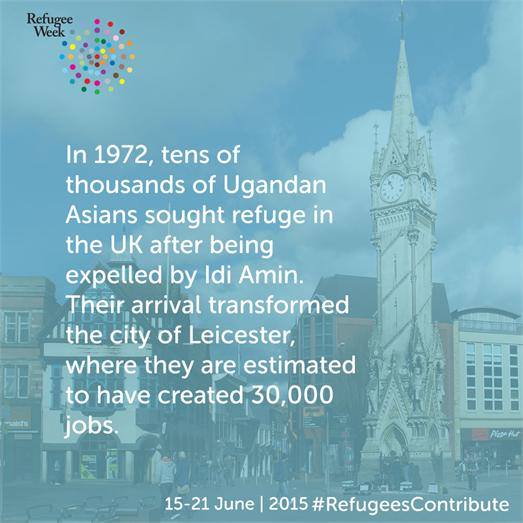
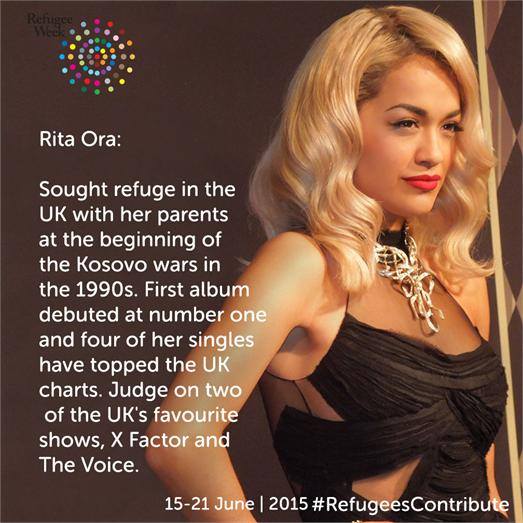
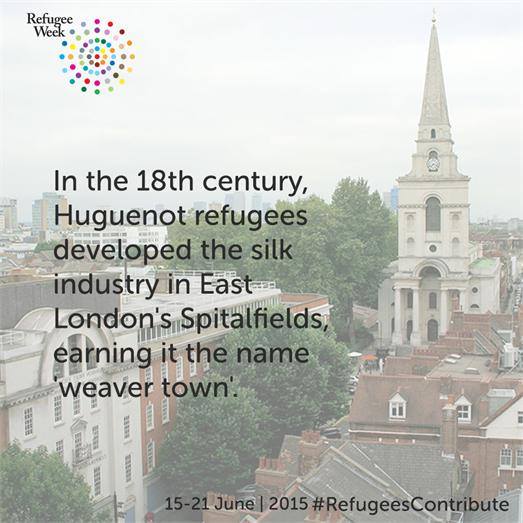
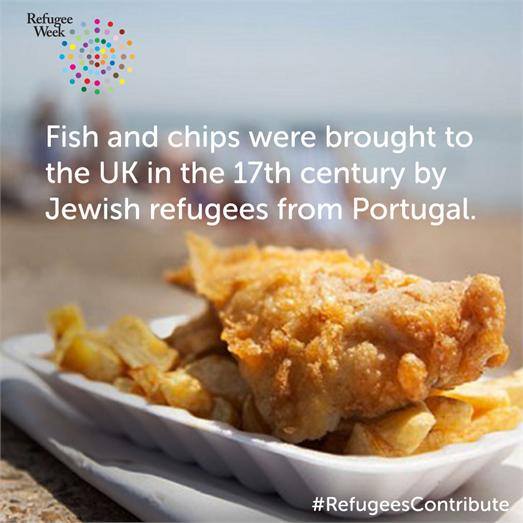
There’s the journey, there’s the fight to be recognised as being in need of protection, and then there’s integration into often new ways of life in a new country. It’s a process which requires resilience to get by, and this resilience often leads to refugees contributing way more back to a country than they supposedly ‘take’, as these images show:
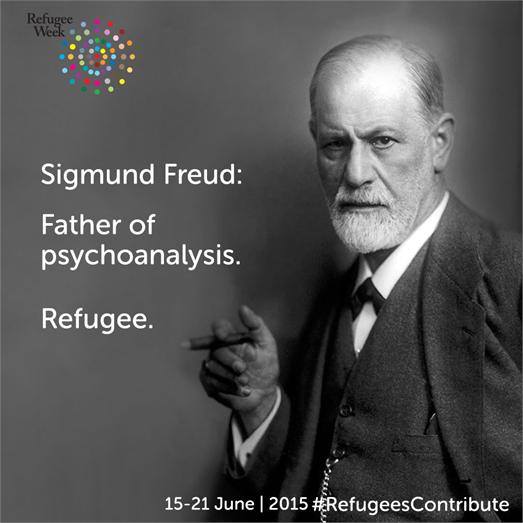
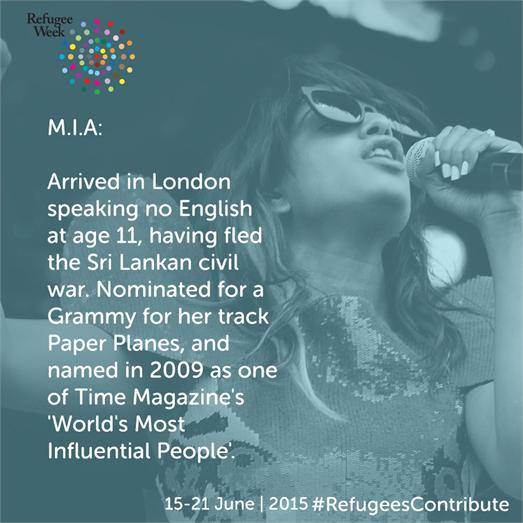
10360624_10153949505249377_3448472978362496321_n 10563098_10153949505259377_1259230812819714048_n 1461295_10153949505269377_2926693228431033240_n 11061240_10153949505279377_8726795237543755324_n 11401350_10153949505359377_934134908733752965_nAs well as these famous refugees and industries which sprang out of refugee communities, there are many thousands of refugees across the UK trying to make their new country a better place, as #RefugeeWeek shows.

#RefugeeWeek in Scotland has become such a large cultural event that this year (which is also the Scottish Refugee Council’s 30th anniversary) it became a Refugee Festival instead. More than 100 events across many different mediums (theatre, comedy, film, art, music, family events, community events, discussions, workshops, etc) celebrated what a diverse and welcoming place Scotland can be. The photos from the Welcome Tent which was erected in the city centre – which can be viewed here – show how positive the messages about refugees can be when celebration (rather than persecution) is focused on.

The world can be a dark place for people seeking safety at the moment, full of war and danger and discrimination. The news gets worse and worse; but that doesn’t stop refugees from finding safety, and succeeding against the odds.

So this year, for Refugee Week, celebrate the contributions refugees have made – and think about the contributions refugees will continue to make to our country.

War Is The Enemy

Humans have been fighting one another since primitive times, but people have also been debating about the rights and wrongs of fighting for just as long. War is ancient and modern, but has war really benefited the globe?

War can be defined as a state armed dispute between different countries and groups within a country. It contends by force of arms, such as in conflicts and crusades.

War is a calamity formed by people, against others. According to most, war isn’t just a chance, instead it is always a choice that someone makes. Countries spend a lot of cash on exercising soldiers to fight and kill. Countries spend even more on producing and formulating weapons and machinery to fight and kill.

Here the term Pacifism comes into place. Pacifism can be defined as the judgement that war and violence is inexcusable and that all disagreements should be resolved through unwarlike means. Pacifism can also defined as learning to outdo the governed belief that armed force is a reasonable way in negotiating with disagreements. Pacifists see war as human punishment to solve issues with ferocity, savagery and killing, as well as state that society has already become level-headed for the modern world, to determine that warlike outrage is an offence, people need to be charged for them, adjudicated and therefore penalised. In essence, Pacifists believe that war is a crime against humanity and that issues should be sought out in another way.

The bottom line of Pacifism is the following: war distorts the standard objectives of society, where morality is forgotten and it is impractical and senseless in a conflict, where the strong do what they want and the weak do what need to do. The choice to pursue war is ruled by pragmatism, which is defined as an approach that assesses theories or viewpoints, in terms of triumph of their actual implementation.

War also effects and puts immense impairment on the economy. If one does not have relative knowledge and profit to formulate weapons, then amenities will not be used coherently. This will lead to society suffering, not just in the front of soldiers, but in the front of their homes, where they will combat hunger.

Throughout the years, governing superiors have formed hate and fear to influence people to participate, even if it’s conflicting to their intuitive and peaceful inclinations. They begin by automating the enemy and anyone who goes against them in their own country. They then proclaim that their arguments are correct, imperial and loyal to murder, in the name of their homeland. Therefore evil ploy is vital for the governing superiors.

We do not need to educate society that killing is wrong, as society already knows this. What we instead need to do is educate society that it’s not correct, imperial or loyal to murder someone that has caused no harm or precisely intimidates you. It is not ones job to murder purely because of controlling superiors. The world needs to come together to promote peace.

Continue reading →

The Conference for Democratic Change in Iran, June 13th

Admin's avatarSupporters of Maryam Rajavi

“U.N. Monitor Says Iran is Worsening on Rights, Despite Pledges”
“Thousands in Iran Protest Acid Attacks on Women”
“Executions Surge in Iran after Nuclear Talks”
“Iran’s Supreme Leader Threatens Nuclear Talks Walkout”

If you paid attention to the news in recent months you saw headlines like these. Reports on social upheaval, labored progress, fundamentalist violence, and government retribution against its own people in Iran. On June 13th, Iranians from around the world will gather along with some 1,000 political figures, activists, and religious leaders in Paris for the Conference for Democratic Change in Iran. The conference will focus on key issues facing Iran and the Middle East, including the state of human rights, the Iranian nuclear talks, the threat of Islamic fundamentalism, and the internment of Iranians at Camp Liberty. Speakers from around the world will outline these issues and explore possible institutional and organizational solutions.

This year’s theme, “

View original post 572 more words